The Electric Guitar and Its Sound: Pickups, Amps and Effects
An electric guitar's sound comes from several parts working together, from the pickups through the amplifier to the pedals. That is why the same riff can sound completely different on two rigs. Which links in the signal chain matter most? This article goes through them in order, from the strings to the effects.
Where Does an Electric Guitar's Sound Come From?
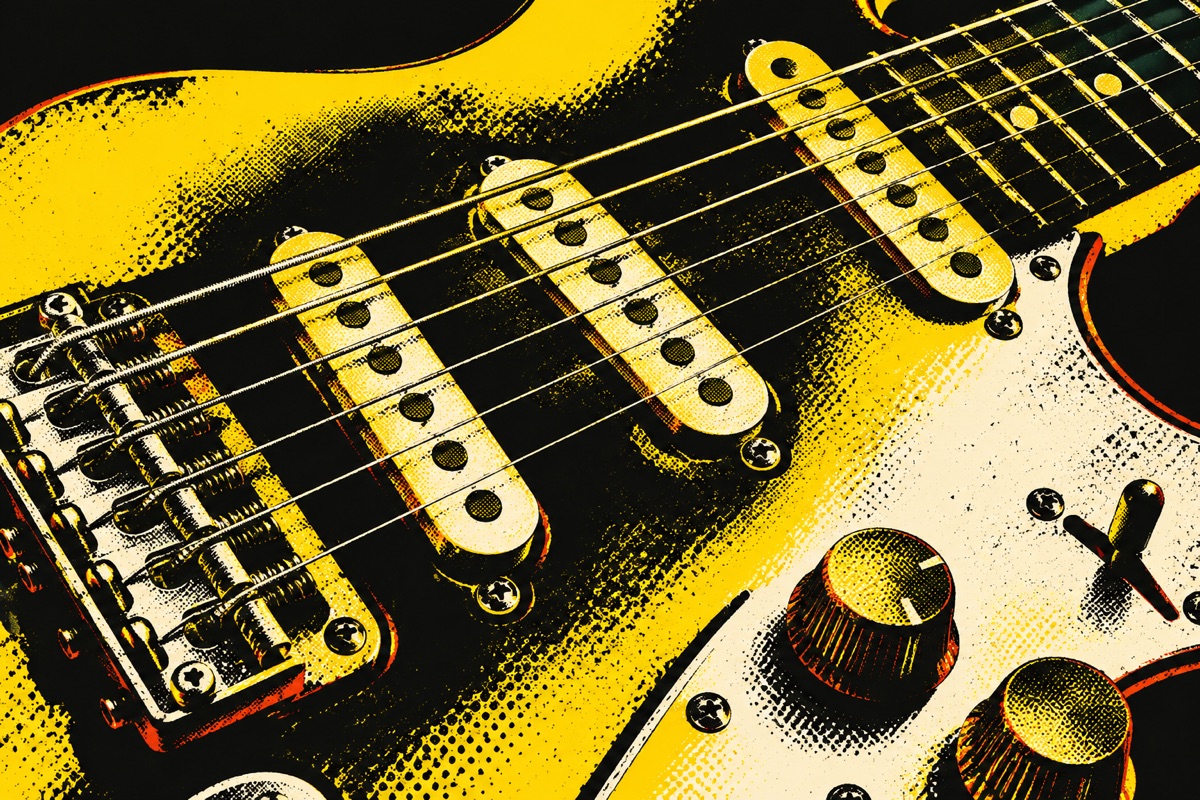
It all starts with the vibrating strings, but only the pickups turn those vibrations into a signal that can be amplified. Electromagnetic pickups respond to the motion of the metal strings and produce an electrical signal that travels to the amplifier. So the sound of an electric guitar depends on the whole setup, not just the body.
Wood, scale length, strings and playing style shape the tone as well. Playing style is easy to underestimate: the way a guitarist picks the strings changes the result even on identical gear. Keep that in mind before blaming the electronics for every difference in sound. Each of these factors leaves its mark, so none of them should be ignored when you compare instruments.
Pickups: Single-Coil and Humbucker
There are two main types of pickup. The single-coil delivers a bright, glassy tone. The humbucker sounds fuller and stronger, and it hums less. Choosing between them is one of the first decisions that shapes a guitar's character. You can hear the difference at the very start of the chain, before the signal reaches the amp or the pedals.
Both designs trace back to classic guitars. The Fender Telecaster arrived in 1950, the Gibson Les Paul in 1952 and the Fender Stratocaster in 1954. Only a few years separate those launches, which shows how quickly new designs appeared in that era. A look at this history helps explain where the basic design principles of today's electric guitars come from.
Tube or Solid-State Amps?
The amplifier is the second key element in the chain. Tube amps are known for a very dynamic response: the tone changes with how hard you play. Solid-state and digital amps are lighter and cheaper in return, which is a major selling point for many players. So the choice comes down to whether responsiveness or weight and price matter more to you.
Marshall plays a part in the history of this technology. Jim Marshall founded the company in London in 1962. It is one of the amp brands worth knowing if you are getting into the subject. The maker's name alone is not decisive, though, because the sound depends on the entire chain and not on any single piece of gear.
Distortion and Effects
Distortion happens when an amp or a pedal deforms the signal. The more of it there is, the more aggressive the tone gets. The amount decides whether the sound is only slightly rough or heavy and cutting. You can get it from the amp itself or from an overdrive or distortion pedal.
The guitar's signal chain also holds other typical effects: wah, delay, reverb and chorus. Each one changes the sound in its own way, whether through echo, a sense of space or a characteristic wobble. Which effects you pick therefore depends on the style and the tone color a piece calls for. Note that effects always work on a signal that the pickups and the amp have already shaped.
Summary
The electric guitar's sound comes from the whole chain working together, from the wood and strings through the pickups to the amp and pedals. The parts form one connected system in which a change to one element affects the others. It pays to get to know each link on its own and then to test how the parts interact in practice.